


When Home Remedies Need Help
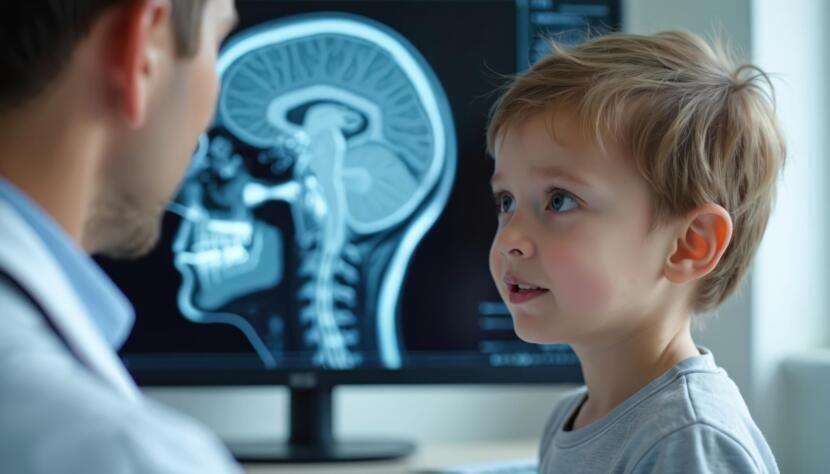
Clinical Care for Your Kids
As parents, we all want to give our kids the best foundation for health. We work on bedtime routines, plan healthy meals, limit screen time, and encourage outdoor play. These daily habits matter, but without a clear brain-body connection, your child’s nervous system may not be able to fully benefit from those efforts.
The Limits of Good Habits
Think of it this way: if your child is struggling with poor sleep, frequent colds, or digestive issues, you might try adjusting their diet, creating a new bedtime, or giving a variety of multivitamins. Those are smart choices, but if their nervous system is disrupted, it’s like pouring water into a cup with a crack—it leaks out before it can be fully used.
Every function of your child’s body—from breathing and digestion to focus and emotional balance—depends on clear neurologic communication. If that communication is blocked or scrambled by a misalignment in the spine, the body can’t coordinate all the healthy habits you’re working so hard to build.
When to Consider Clinical Help
Some signs that at-home habits alone may not be enough include:
- Infants: Trouble latching, frequent colic, infrequent pooping.
- Toddlers: Speech delays, poor sleep, frequent infections.
- Early Childhood: Chronic fatigue, emotional outbursts, social withdrawal.
- School-Age Children: Posture issues, difficulty focusing, scoliosis, persistent illness.
- Teens: Ongoing exhaustion, emotional instability, signs of depression.
These challenges often point to neurologic interference that needs more than routine changes at home.
Why Upper Cervical Care Makes the Difference
At Cerebral Chiropractic Center, we specialize in a form of chiropractic care that looks beyond general spine health. We focus on the upper cervical spine—the atlas (C1) and axis (C2)—which protect the brainstem. The brainstem regulates nearly every automatic function in the body, from digestion to sleep to emotional regulation.
When these structures are misaligned, it creates interference in the brain-body connection. By restoring alignment, we make it possible for the nervous system to clearly coordinate all the healthy habits you’re already working on at home. That’s the difference between simply stacking blocks and building a tower that stays upright.
Building Health That Lasts
At-home habits—nutrition, sleep, play, family rhythms—lay an important foundation. But if your child’s nervous system isn’t functioning clearly, those habits can’t be fully integrated. Addressing the neurologic connection first gives the body the ability to process, absorb, and benefit from everything else you do as a parent.
Related Articles:
- Alcantara J, Ohm J, Kunz D. The safety and effectiveness of pediatric chiropractic: A survey of chiropractors and parents in a practice-based research network.
Explore (NY). 2009;5(5):290-295. doi:10.1016/j.explore.2009.06.002.
- Haavik H. Research. Heidi Haavik Research. Available from:https://www.heidihaavik.com/pages/research.
- Lelic D, Niazi IK, Holt K, Jochumsen M, Dremstrup K, Yielder P, Murphy B, Drewes AM, Haavik H. Manipulation of dysfunctional spinal joints affects sensorimotor integration in the prefrontal cortex: A brain source localization study.
Neural Plast. 2016;2016:3704964. doi:10.1155/2016/3704964. PMID: 27069632; PMCID: PMC4819015.
- Pozzi F, Snider-Adler M, Brem J. Dysautonomia after pediatric brain injury.
PM R. 2012;4(8):624-628. doi:10.1016/j.pmrj.2012.05.010. PMID: 22920328; PMCID: PMC3393822.
- Zhang J, Dean D, Nosco D, Strathopulos D, Floros M. Effect of chiropractic care on heart rate variability and pain in a multisite clinical study. J Manipulative Physiol Ther. 2006;29(4):267-274. doi:10.1016/j.jmpt.2006.03.005. PMID: 16690380.
More Articles